
Good debt, bad debt… and debt that can work overtime?
Financial Advice
12-02-2026
Good debt, bad debt… and debt that can work overtime?
SHARE
Debt recycling in 2026: Explained
For many Australians, paying off the home loan is the number one financial goal - and rightly so. Owning your home outright provides peace of mind and financial security. What many may be unaware of is that there are many ways to make the journey more efficient, particularly if a lot of your wealth is tied up in your property.
One strategy worth considering is debt recycling.
What is debt recycling?
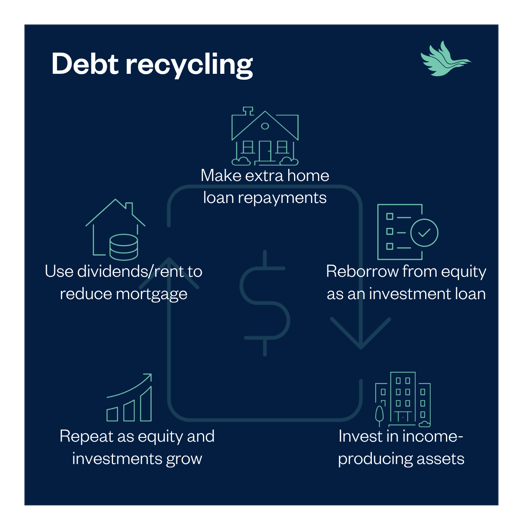
Debt recycling is about reshaping how your loans and cash are structured so you can build wealth and improve tax efficiency over time. It gradually converts your home loan, where interest isn’t tax‑deductible, into investment debt, where the interest may be deductible.
Importantly, it doesn’t mean taking on more overall debt. It’s simply about using what you already have, but in a smarter way.
A practical example
Our expert advice team recently helped a client who had sold an investment property and parked about $500,000 in their home loan’s offset account. This meant they were saving interest, but that cash wasn’t doing much beyond sitting idle.
Using a debt recycling approach, they paid down the $500,000 of their home loan, then re‑borrowed the same amount under a separate loan, split for investment purposes. The re‑borrowed funds went into a diversified investment portfolio suited to their long‑term goals and comfort with risk.
Here’s why that mattered:
- The $500,000 investment loan incurred about $25,500 in annual interest.
- At a 47% marginal tax rate, that interest created a tax saving of roughly $13,000 a year.
- Their non‑deductible home loan went down, while their long‑term investments started working for them.
Why are people looking at this strategy?
Debt recycling can help:
- Build an investment portfolio without relying solely on new savings.
- Improve your overall tax efficiency.
- Keep access to funds and financial flexibility.
Particularly for higher‑income earners, the potential tax benefits can be meaningful.
Things to keep in mind
This strategy isn’t right for everyone. Investments can go up and down, and you’ll need to ensure you’re comfortable with the extra complexity and risk involved. Proper loan structuring and good record‑keeping are also key to keeping the tax benefits legitimate.
That’s why debt recycling should always sit within a well‑thought‑out financial plan that considers your goals, income stability, and risk tolerance.
Final thoughts from Financial Advisor Leandro Bonin
Keeping cash in an offset account makes perfect sense for short‑term goals or peace of mind. But if those funds start sitting idle for years, it might be worth exploring whether debt recycling could work better for you.
With personalised advice and the right structure, you can reduce non‑deductible debt, build an income‑producing investment portfolio, and make your hard‑earned savings work smarter, without taking unnecessary risks.
If you’d like to discuss your situation with a specialist or how you can benefit from debt recycling, please request a call back.
This information is general in nature and is provided by Partners Wealth Group. It does not take into account the objectives, financial situation or needs of any particular person. You need to consider your financial situation and needs before making any decisions based on this information.